Does Local SEO Still Matter in 2026? Here's the Truth for Service-Based Businesses
Let me cut straight to it: local SEO isn't just alive in 2026, it's more critical than ever for service-based businesses.
I've seen the headlines. "AI is killing search." "Nobody uses Google anymore." "SEO is dead." But here's what I'm actually seeing in the trenches at Ideation Digital: local search is driving more qualified leads for our clients than almost any other channel. Medical practices, event venues, boxing clubs, contractors, they're all winning because they understand one simple truth.
People still need local services. And they still search for them.
The Reality of Search Behavior in 2026
Here's what's actually happening. Yes, AI assistants are answering more questions. Yes, people are using ChatGPT and Gemini for research. But when someone needs a dentist, a plumber, or a wedding venue? They're pulling up Google Maps or typing "[service] near me."
Why? Because AI can't book your appointment. AI can't verify that a business is actually open, has good reviews, and is five minutes away. Local search bridges the gap between digital discovery and real-world action.
The data backs this up. Local queries indicate immediate purchase intent. Someone searching "boxing gym near me" isn't casually browsing: they're ready to sign up. This makes local SEO one of the highest-converting digital marketing channels available to small and medium-sized businesses.
What's Changed About Local SEO
Now, I won't pretend local SEO looks the same as it did five years ago. Google has evolved. AI integration has changed how results are displayed. But the fundamentals? They've only become more important.
Here's what drives local SEO success now:
Location accuracy and service area clarity – Google needs to understand exactly where you operate
Website quality and performance – Slow, clunky sites get buried
Business credibility signals – Your digital footprint needs to tell a consistent story
Reviews and user engagement – Social proof matters more than ever
Structured data and AI readability – Your site needs to speak Google's language
The competitive landscape has shifted toward structure over tactics. Ranking "number one" no longer guarantees success. Google now prioritizes clear business structure, consistency, and location signals over keyword stuffing or link schemes.
On-page elements tied to service and location clarity carry approximately 36% weight in local organic results: higher than links. That means well-structured location and service pages outperform most other ranking factors.
Why Service-Based Businesses Can't Ignore This
Who benefits most from local SEO? Any business where customers search for services by location:
Medical practices and dental offices
Event venues and wedding spaces
Fitness studios and boxing clubs
Home service contractors (plumbers, HVAC, landscapers)
Legal practices and professional services
Restaurants and hospitality businesses
If your customers are looking for what you offer "near me," local SEO should be a cornerstone of your digital marketing strategy.

I recently worked with a home service business that had been struggling with inconsistent lead flow. Their website was decent. Their services were solid. But their local SEO foundation was a mess: inconsistent NAP data, no location pages, minimal review strategy.
We rebuilt their local SEO from the ground up. The results? A 200% increase in local first-page rankings, 39% improvement in overall keyword position, and 176 confirmed inbound leads. That's not theory. That's what happens when you take local SEO seriously.
Google Maps and the Local Pack: Still the Battleground
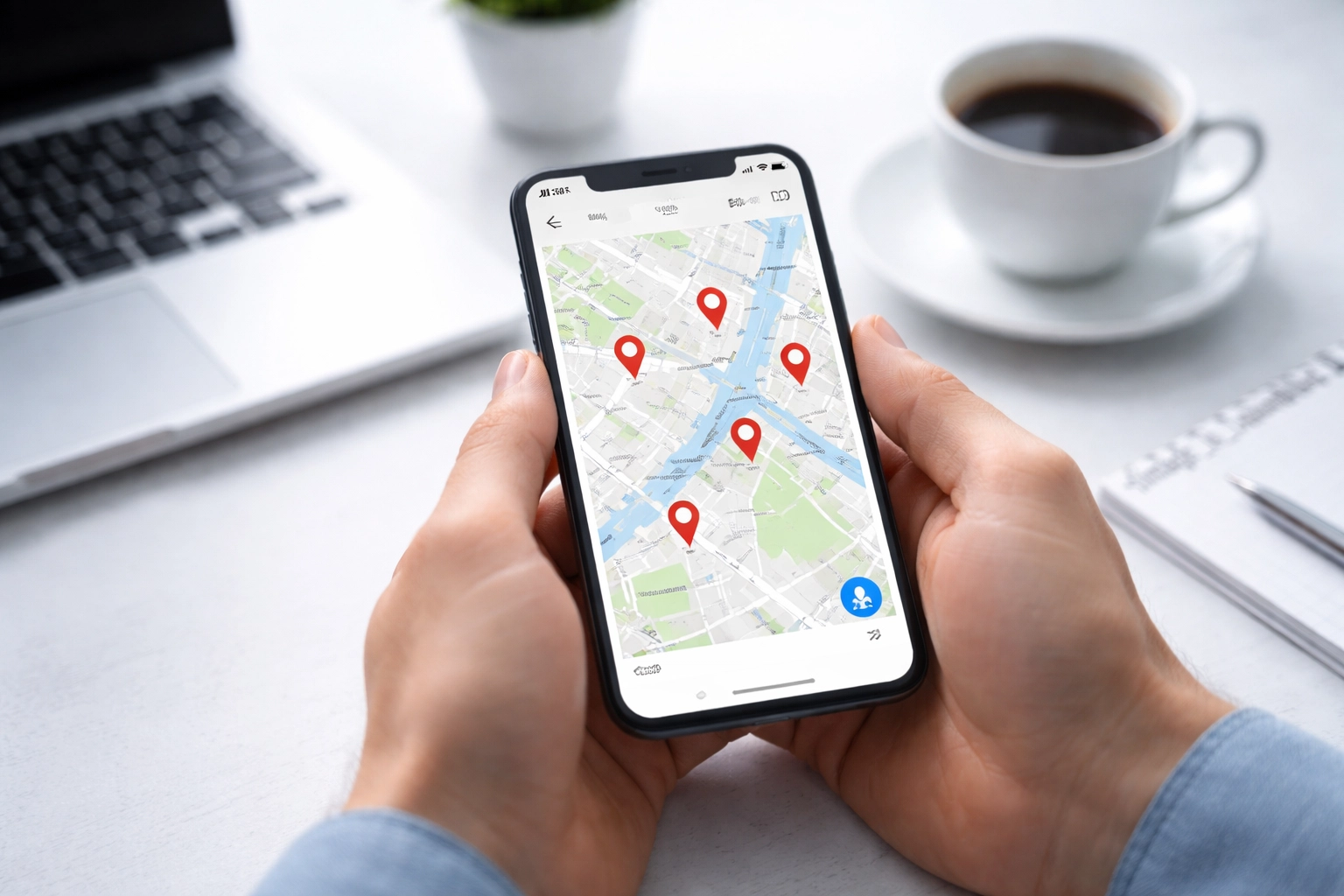
Let's talk about where the real competition happens. When someone searches for a service in their area, they're usually seeing the Local Pack: those three business listings with the map at the top of search results.
Getting into that Local Pack is everything for lead generation. It's prime real estate. And it's powered by your Google Business Profile optimization, review velocity, and local relevance signals.
Here's what I tell every service-based business owner: your Google Business Profile isn't optional. It's your digital storefront. Keep it updated. Post regularly. Respond to reviews. Add photos. This isn't busy work: it's the foundation of your local visibility.
AI and Local Search: Friends, Not Enemies
I know there's anxiety about AI disrupting search. But here's the thing: AI actually makes local SEO more important, not less.
Why? Because AI systems need structured, clear data to pull from. When Google's AI generates local recommendations, it's pulling from businesses with:
Clean, consistent business information
Strong review profiles
Well-organized website content
Clear service and location pages
If your local SEO is solid, you're not just ranking in traditional results: you're positioning yourself to be featured in AI-generated answers and recommendations. The businesses that win in 2026 are the ones that make themselves easy for both humans and algorithms to understand.

The Long Game: Why Local SEO Compounds
Here's something I wish more business owners understood: local SEO is a long game, but it's one that compounds.
Paid ads give you instant visibility. The moment you stop paying? Gone. Local SEO works differently. It builds gradually, but once you've established strong local rankings and a solid review profile, that visibility becomes incredibly difficult for competitors to displace.
This creates:
Predictability – Consistent lead flow you can count on
Reduced ad dependency – Lower your cost per acquisition over time
Digital equity – An asset that grows in value the longer you invest
Businesses that treat local SEO as an ongoing effort: rather than a one-time project: gain compounding visibility and trust advantages in their markets.
What a Solid Local SEO Strategy Looks Like
So what should service-based businesses actually be doing? Here's the framework I recommend:
1. Nail Your Google Business Profile
Complete every section. Choose accurate categories. Add services with descriptions. Post updates weekly. This is your foundation.
2. Build Location and Service Pages
If you serve multiple areas, create dedicated pages for each. Make it crystal clear what you offer and where you offer it.
3. Get Serious About Reviews
Implement a systematic approach to requesting reviews. Respond to every review: positive and negative. Volume and recency both matter.
4. Ensure NAP Consistency
Your Name, Address, and Phone number need to be identical everywhere: your website, directories, social profiles, everywhere.
5. Optimize for Mobile and Speed
Most local searches happen on mobile. If your site is slow or clunky on phones, you're losing leads.
6. Create Locally Relevant Content
Blog posts, FAQs, and resources that address local customer needs signal relevance to Google.
This isn't rocket science. But it does require consistency and attention to detail. That's where most businesses fall short.
The Bottom Line
Local SEO in 2026 isn't dead. It's evolved. And for service-based businesses: whether you're running a medical practice, managing an event venue, or operating a boxing club: it remains one of the most effective ways to generate consistent, high-quality leads.
The businesses that thrive are the ones that stop chasing shortcuts and start building real local presence. Structure over tactics. Consistency over gimmicks. Long-term thinking over quick fixes.
At Ideation Digital, we work with service-based businesses every day to build local SEO strategies that actually drive results. No contracts, no cookie-cutter approaches: just customized solutions built for your specific market and goals.
If you're ready to stop wondering whether local SEO matters and start leveraging it for real growth, let's talk.
( Sean Hyde)
