Unlock your AI potential — practical steps for business-ready adoption
AI is changing how industries operate. But adopting it successfully takes more than buzzwords — it takes readiness across infrastructure, skills, and strategy. This guide walks you through an AI readiness assessment: what it measures, why it matters, and how to spot gaps that slow adoption. We’ll define AI readiness, show how to run a capability assessment, and explain how small and medium businesses can adapt checklists to their realities. For expert guidance, consider consulting resources like Sean Hyde's AI expertise.
What AI readiness means — and why companies can’t afford to ignore it
AI readiness measures how prepared an organization is to implement AI in a meaningful, sustainable way. That includes your tech stack, data practices, team skills, and alignment between AI projects and business goals. Companies that invest in readiness move faster from pilots to measurable impact — improving decisions, streamlining operations, and staying competitive. Readiness also shapes culture: teams that expect change and learn continuously adapt more smoothly to new AI-driven workflows.
How AI maturity models describe organizational readiness
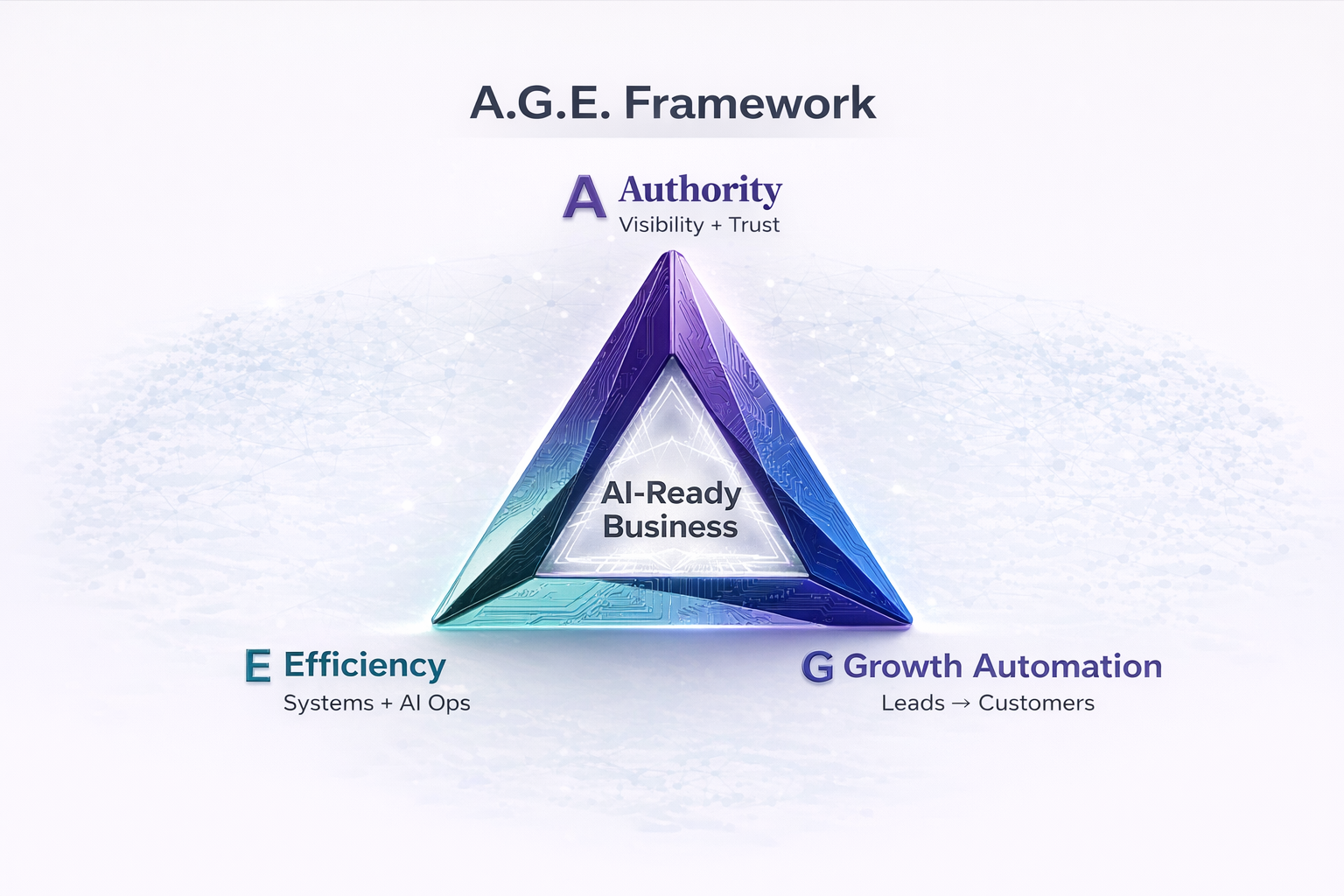
AI maturity models break readiness into stages — from awareness to advanced, production-grade use. Each stage captures capabilities across data governance, infrastructure, tooling, and people. Mapping your organization onto a maturity model helps you see where you are today and build a focused roadmap to get further, faster. For a structured approach, explore the AGE Framework developed by Sean Hyde.
Academic and applied research offer structured models and tools to guide that progression.
AI Maturity Model & Management Framework for Organizations
This research presents a combined framework that links AI maturity model concepts with an AI management metamodel, and pairs them with a web tool to help organizations assess and improve AI capabilities.
The Management of Artificial Intelligence: Developing a Framework Based on the Artificial Intelligence Maturity Principle., P Fukas, 2022
Key benefits of an AI readiness evaluation
Running a readiness evaluation delivers clear, actionable outcomes:
Identifying operational challenges: Locate specific obstacles to deploying AI so you can correct them deliberately.
Strategic tool selection: Choose technologies that actually fit your goals and capabilities, instead of following trends.
Improving efficiency: Target investments where they reduce friction and free up people to work on higher-value tasks.
How to run an effective AI capability assessment in your company

A strong capability assessment follows a clear, repeatable process: inventory current tools and data, test team skills, rate technical readiness, and map gaps to prioritized projects. The goal is a concise, actionable picture of where to invest next.
Which skills to look for in an AI skills gap analysis
Focus on the skills that directly affect whether AI projects will succeed:
Data analysis: The ability to clean, interpret, and turn data into reliable inputs for models.
Machine learning: Practical knowledge of algorithms, feature engineering, and model validation.
Project management: Experience running data-driven projects that deliver on time and within scope.
Tools and frameworks that support capability evaluations
Use established tools and frameworks to make assessments consistent and comparable:
AI maturity assessment tools: Platforms and questionnaires that benchmark current capabilities and suggest next steps.
Data management frameworks: Structures for governance, quality, and access that make data usable for AI.
Performance metrics: Clear KPIs to measure model performance, business impact, and operational stability.
Many of these approaches align with international process-assessment standards and best practices.
AI Maturity Assessment Framework Based on International Standards
This paper introduces a novel framework aligned with international process-assessment standards, offering a structured method for AI system developers to evaluate and improve development practices while maintaining compliance and efficiency.
An Artificial Intelligence maturity assessment framework based on international standards, R Márquez, 2025
Steps to build a successful AI adoption roadmap

A practical roadmap lays out prioritized projects, required capabilities, milestones, and timelines. It balances quick wins with foundational work so solutions scale reliably.
How to prioritize AI projects by readiness
Rank projects by a combination of impact and feasibility. Consider:
Alignment with business goals: Prioritize work that clearly supports strategic objectives.
Resource availability: Match projects to the skills, budget, and infrastructure you actually have.
Potential ROI: Favor initiatives with measurable returns or that reduce material risk.
Milestones and timelines to include in your strategy
Set realistic milestones so progress is visible and adjustable:
Initial assessment completion: Finish the readiness evaluation within the first quarter.
Pilot project launch: Roll out a targeted pilot within six months to validate assumptions.
Full-scale implementation: Scale proven pilots to production within a year, where feasible.
How small and medium-sized businesses can adapt AI readiness checklists
SMBs face different constraints than large enterprises, so checklists must be pragmatic: prioritize low-cost, high-impact use cases and build capabilities incrementally.
Unique challenges SMBs commonly face
Typical hurdles for smaller organizations include:
Resource constraints: Limited budgets and staff make it essential to pick focused, high-value projects.
Over-automation risks: Avoid automating tasks that need human judgment; balance efficiency with oversight.
Insufficient training data: Smaller firms may need to augment data, use transfer learning, or rely on curated third-party datasets.
Research underscores these challenges and points to tailored strategies for SMEs.
AI Adoption Challenges & Benefits for SMEs
Small and medium-sized enterprises are vital to the economy but often lack the resources and expertise to adopt AI at scale. This study identifies high-value AI applications for SMEs, examines barriers, and evaluates impacts on business processes.
Artificial intelligence for small and medium-sized enterprises: Identifying key applications and challenges, M Schönberger, 2023
Bringing AI readiness into your digital marketingstrategy
Integrate AI readiness with marketing by focusing on measurable improvements:
Data-driven decision making: Use AI analytics to refine targeting, creative, and channel mix.
Personalization: Apply AI to deliver relevant experiences that increase engagement and conversion.
Automation: Automate repetitive marketing tasks so your team can focus on strategy.
For specialized support, consider working with an AI marketing consultant who can help integrate AI into your campaigns effectively.
How AI consultants and AI implementation consultants can help
Engaging with AI consultants and AI implementation consultants can significantly accelerate and de-risk your AI adoption journey. These experts bring specialized knowledge and practical experience to guide organizations through complex challenges.
Role of an AI consultant
An AI consultant helps assess your organization's current AI readiness, identify strategic opportunities, and design tailored AI strategies aligned with your business goals. They provide insights into the latest AI technologies, help prioritize projects based on impact and feasibility, and advise on best practices for data governance and ethical AI use. Their objective perspective can uncover hidden gaps and recommend actionable steps to build internal capabilities. To connect with experienced consultants, visit Sean Hyde's contact page.
Role of an AI implementation consultant
Once a strategy is defined, an AI implementation consultant focuses on executing AI projects effectively. They assist with selecting appropriate tools and platforms, managing technical integration, and ensuring that AI solutions are scalable and maintainable. They also help coordinate cross-functional teams, manage timelines and budgets, and provide training to upskill staff. Their hands-on expertise helps translate AI readiness assessments and roadmaps into tangible business outcomes.
Benefits of working with AI consultants
Accelerated adoption: Leverage expert knowledge to avoid common pitfalls and speed up deployment.
Customized solutions: Receive recommendations tailored to your organization's unique context and constraints.
Risk mitigation: Identify and address technical, operational, and ethical risks early in the process.
Capacity building: Gain access to training and mentorship that strengthen your internal AI capabilities.
Change management: Facilitate cultural shifts and stakeholder engagement to support sustainable AI integration.
Checklist Summary: Key Points for AI Readiness
To help you quickly grasp the essentials of AI readiness and adoption, here is a practical checklist summarizing the key points from this article:
Assess your current AI maturity: Use AI maturity models to evaluate your organization's stage, focusing on data governance, infrastructure, tooling, and skills.
Conduct a capability assessment: Inventory tools and data, evaluate team skills in data analysis, machine learning, and project management, and identify gaps.
Choose strategic AI tools: Select technologies aligned with your business goals and existing capabilities rather than following trends.
Develop a prioritized AI adoption roadmap: Balance quick wins with foundational projects, set clear milestones such as readiness evaluation completion within 3 months, pilot launch within 6 months, and full-scale implementation within 12 months.
Address SMB-specific challenges: For small and medium businesses, focus on low-cost, high-impact use cases, avoid over-automation, and consider data augmentation or transfer learning to overcome limited training data.
Integrate AI into marketing strategies: Leverage AI for data-driven decision making, personalization, and automation to improve engagement and efficiency.
Measure and track progress: Use KPIs such as model accuracy, deployment frequency, ROI, and customer satisfaction to evaluate AI initiatives.
Close skills gaps: Invest in continuous education, partnerships with educational institutions, and mentorship programs to build AI expertise.
Foster an AI-ready culture: Encourage experimentation, learning, and open communication to support AI adoption.
Address ethical considerations: Establish guidelines for fairness, transparency, and accountability, conduct bias audits, and train teams on ethical AI practices.
Engage AI consultants: Utilize AI and AI implementation consultants to accelerate adoption, customize solutions, mitigate risks, build capacity, and manage change effectively.
Examples and Statistics:
According to a 2023 McKinsey report, companies that have reached advanced AI maturity levels are 3 times more likely to report revenue growth above their industry average.
In a survey by Deloitte, 61% of organizations cited lack of skilled personnel as a primary barrier to AI adoption, highlighting the importance of targeted upskilling programs.
A case study from a mid-sized retail company showed that after conducting an AI readiness assessment and implementing prioritized projects, they improved operational efficiency by 25% within 12 months. More case studies can be found at Sean Hyde's case studies page.
Research indicates that SMBs that adopt AI-driven marketing personalization see an average increase of 15% in conversion rates, demonstrating the value of integrating AI into digital marketing strategies.
Common challenges and frequently asked questions about AI readiness
Organizations often hit the same roadblocks when assessing readiness — clarity and practical steps help overcome them.
How do you measure AI maturity effectively?
Measure maturity with a mix of qualitative and quantitative indicators: data quality and access, infrastructure resilience, deployment frequency, model performance, and team skills. Use a repeatable framework so you can track progress over time and compare against peers.
What are best practices to close AI skills gaps?
To address talent shortages, combine internal upskilling with external partnerships:
Continuous education: Run focused training programs and micro-credentials to build practical skills.
Partnerships with educational institutions: Collaborate with universities or bootcamps for tailored curricula and talent pipelines.
Mentorship programs: Pair experienced practitioners with newer team members to speed knowledge transfer.
Which case studies show effective AI readiness and adoption?
Real-world examples reveal patterns: align projects to clear business outcomes, iterate quickly on pilots, and invest in the capabilities needed for scaling.
How have companies increased ROI through AI readiness assessments?
Organizations that map readiness to strategy typically see material ROI improvements by:
Increased efficiency: Streamlined workflows reduce costs and free capacity.
Enhanced decision-making: Better data and models lead to more timely, profitable choices.
Competitive advantage: Companies that operationalize AI outperform peers in speed and innovation.
Lessons from leading AI adoption roadmaps
Top roadmaps share common lessons:
Importance of a clear vision: A well-defined objective keeps efforts focused and stakeholders aligned.
Iterative approach: Pilot, learn, and refine before scaling to reduce risk and cost.
Stakeholder engagement: Early buy-in from business owners, IT, and legal avoids surprises later.
Frequently Asked Questions
What are the first steps for organizations looking to assess their AI readiness?
Start with a focused inventory: list current data sources, core systems, and the teams touching them. Run a short skills survey and a technology checklist to identify quick gaps. Involve stakeholders from across the business so the assessment reflects real needs and constraints. The output should be a prioritized list of actions, not an endless report.
How can organizations ensure their AI initiatives align with business objectives?
Begin by defining clear, measurable goals and the KPIs that demonstrate progress. Map each AI project to those KPIs and involve cross-functional owners from day one. Regularly review results and be prepared to pivot if a project doesn’t move the needle. Alignment is a continuous habit, not a one-time step.
What role does organizational culture play in AI readiness?
Culture is decisive. Teams that value experimentation, learning, and data-informed decisions adopt AI faster. Foster open communication about risks and benefits, and offer hands-on training so people see how AI supports — not replaces — their work. Leadership that models curiosity and accountability makes the difference.
How can small businesses effectively manage the costs associated with AI adoption?
Manage costs by starting small: run low-cost pilots that solve visible pain points. Use cloud services and prebuilt models to avoid heavy infrastructure spend. Seek partnerships, grants, or vendor credits when available. And prioritize upskilling existing staff so you don’t rely solely on expensive hires.
What metrics should organizations track to evaluate the success of their AI initiatives?
Track both technical and business metrics: model accuracy and stability, deployment frequency, time-to-value, cost savings, and customer-facing KPIs like conversion or satisfaction. Tie technical measures to business outcomes so it’s clear whether the AI work is driving impact.
How can organizations address ethical concerns related to AI implementation?
Take a proactive stance: write clear ethical guidelines focused on fairness, transparency, and accountability. Engage diverse stakeholders when designing systems, run bias and impact audits regularly, and document decisions so you can explain model behavior. Training teams on ethical practices helps turn policy into everyday behavior.